

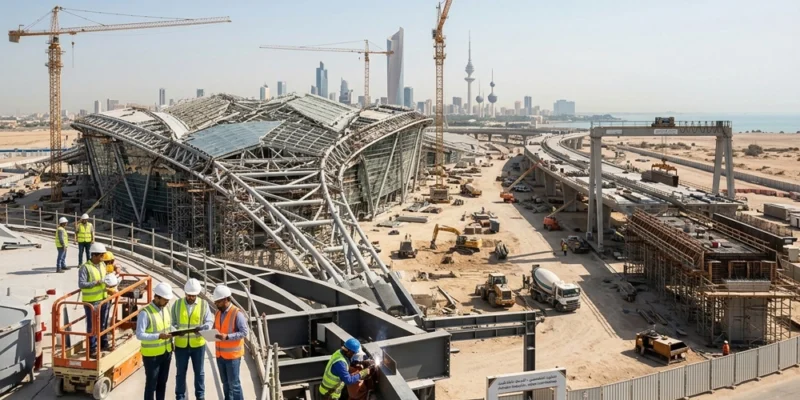
Specialty construction in Kuwait covers projects that require more than standard building work and often involve specialised engineering, industrial systems, infrastructure, equipment, or technical coordination. The types of opportunities available can vary according to government programmes, industrial investment, infrastructure requirements, private development, and the needs of operating facilities.
Examples can include process-plant construction, civil and infrastructure works, roads and related infrastructure, electrical engineering, water-related facilities, industrial construction, specialty engineering packages, and projects requiring coordinated mechanical, electrical, civil, and other disciplines.
For a contractor such as Kuwait Company for Process Plant Construction & Contracting (KCPC), specialty work can involve combining construction execution with engineering capabilities and project coordination. Customers and project owners evaluating contractors should therefore look at both the technical scope of the project and the contractor's experience with comparable work.
Key takeaways
- Specialty construction projects in Kuwait can span industrial, process-plant, infrastructure, civil, electrical, water, and other technically demanding areas.
- Project owners should match contractor experience to the specific technical and operational requirements of the project.
- Large specialty projects often require coordination across multiple engineering disciplines.
- Safety, quality, environmental management, project controls, and specialist subcontractor coordination can be critical.
- A contractor's documented experience on comparable projects can provide useful evidence when evaluating capability.
Process Plant and Industrial Construction
Process-plant construction involves facilities where industrial processes, equipment, utilities, and supporting infrastructure must operate together. These projects can require specialised planning, engineering coordination, installation, testing, commissioning support, and strict safety procedures.
The complexity of process-plant work means that a contractor may need experience beyond conventional building construction. Site coordination, equipment interfaces, piping or electrical requirements, access, safety systems, and operational constraints can all affect execution.
KCPC's full name and stated focus are directly associated with process-plant construction and contracting. Customers evaluating this type of project should review the contractor's relevant project history and technical scope rather than relying solely on general construction experience.
Civil Engineering and Infrastructure Projects
Civil and infrastructure work can include roads, site development, earthworks, structures, utilities, and other supporting infrastructure. Such projects may be undertaken for government entities, industrial facilities, private developments, and other large-scale clients.
Infrastructure projects often involve extensive site coordination and can be affected by traffic management, utilities, materials, environmental conditions, procurement, and interface requirements.
Contractors working in this area should demonstrate suitable equipment, engineering resources, project-management systems, safety processes, and experience with the relevant type and scale of work.
Electrical Engineering Projects
Electrical engineering can form a major component of industrial, commercial, infrastructure, and process-related construction. Projects may require electrical installation, distribution systems, equipment interfaces, controls, testing, and coordination with other disciplines.
Electrical work is rarely isolated on a large project. It can be closely connected to civil works, mechanical systems, equipment installation, commissioning, and operational requirements.
When comparing contractors, project owners should ask about the contractor's electrical capabilities, relevant completed work, engineering resources, safety procedures, testing processes, and ability to coordinate electrical work with the wider project.
Water and Utility-Related Facilities
Water facilities and utility infrastructure can involve technically specialised civil, mechanical, electrical, and operational requirements. Depending on the project, work can include construction or upgrading of facilities, supporting infrastructure, equipment installation, and associated engineering works.
Because water and utility facilities can remain operational during construction or require strict performance requirements, project planning and coordination are particularly important. Customers should assess whether the contractor has relevant experience and understands the operational constraints associated with the facility.
Specialty Products and Supporting Construction Services
Specialty construction can also include supporting services and products that are integrated into larger projects. The audit material references areas such as scaffolding and equipment rentals, elevators or building transport systems, marble and natural stone products, and electrical engineering.
The availability of these capabilities can reduce the number of separate interfaces that a project owner has to manage. However, customers should still confirm the exact scope, responsible teams, specifications, standards, and commercial terms for each package.
What Project Owners Should Check
Before awarding a specialty construction project, owners should examine:
- Relevant completed projects.
- Technical qualifications and engineering resources.
- Quality-management systems.
- Occupational health and safety processes.
- Environmental-management procedures.
- Equipment and mobilisation capabilities.
- Subcontractor and supplier management.
- Project scheduling and reporting.
- Testing, inspection, and documentation procedures.
- Ability to coordinate multiple disciplines.
- References from comparable projects.
A contractor's experience should be matched to the actual technical requirements rather than judged solely by the number of projects completed.
KCPC and Specialty Construction
The audit material presents KCPC as an established contractor with capabilities across civil engineering, infrastructure, electrical engineering, water facilities, engineering products, and specialty services. It also describes integrated capabilities intended to reduce dependence on multiple external subcontractors.
For a prospective project owner, these capabilities are relevant when a project contains multiple technical packages that need coordinated delivery. However, the appropriate evaluation remains project-specific: the customer should request evidence of comparable projects, confirm the exact scope of services, and evaluate the resources proposed for the particular contract.
How can we help
Kuwait's specialty construction market can include process-plant, industrial, infrastructure, civil, electrical, water, and other technically demanding projects. These projects often require stronger coordination, specialist engineering resources, safety systems, quality controls, and project-management capabilities than routine construction.
Project owners should identify the technical requirements of their project first and then compare contractors based on documented experience, relevant capabilities, management systems, resources, and comparable project references. For projects involving several engineering disciplines, an integrated contractor can also simplify coordination across the project lifecycle.