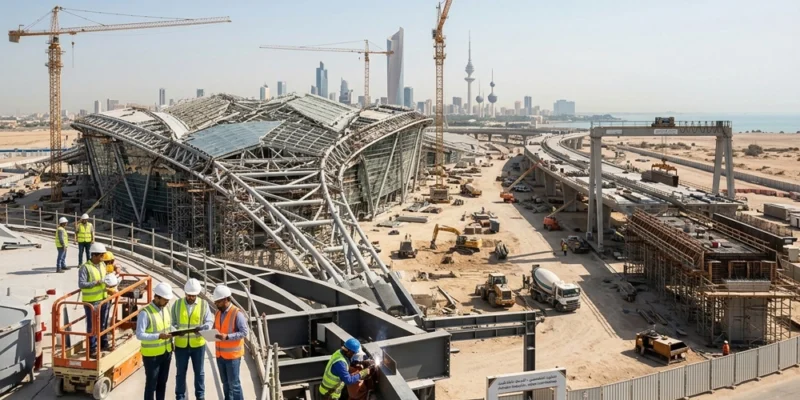
What should I look for when comparing construction services in Kuwait?

When comparing construction services in Kuwait, customers should look beyond the quoted price and evaluate the contractor's relevant experience, technical capabilities, quality systems, safety record and processes, project-management approach, communication, financial and organisational capacity, and ability to deliver the specific scope of work.

Construction projects can differ substantially. A contractor suitable for residential building work may not have the resources or experience required for a process plant, major infrastructure project, industrial facility, or technically complex engineering package. The comparison should therefore begin with the customer's requirements and then assess each contractor against the same criteria.

The audit material for KCPC highlights several factors that can be useful when evaluating a contractor: ISO certifications, documented project experience, integrated engineering capabilities, corporate governance, and evidence of on-time and within-budget delivery. These factors can be incorporated into a structured comparison rather than relying only on price.

Key takeaways

  • Compare contractors against the same project-specific criteria.
  • Examine relevant experience rather than total project count alone.
  • Review quality, occupational health and safety, and environmental management systems.
  • Evaluate project-management and communication processes.
  • Confirm what is included in the quotation and identify exclusions.
  • Consider subcontractor coordination and in-house capabilities.
  • Request comparable project references and evidence of completed work.
  • Treat price as one part of the comparison rather than the only criterion.

Relevant Project Experience

The first question should be whether the contractor has delivered projects comparable to yours. Relevant experience can include the type of facility, project size, technical disciplines, location, contract structure, and operating environment.

For example, a process-plant project may require a different set of capabilities from a commercial building. Infrastructure work may require different equipment, site controls, and coordination processes from a private development.

Ask contractors to provide relevant project examples and clarify their exact role in each project. This helps distinguish between a contractor that directly delivered the work and one that participated only in a limited portion of it.

Quality Management

Quality management is another important comparison area. Customers should ask how the contractor controls materials, workmanship, inspections, testing, documentation, non-conformances, and final handover.

The audit example specifically references ISO 9001:2015 as a quality-management certification. A certification can provide evidence that a formal management system exists, but customers should also ask how that system is applied to the specific project.

Useful questions include who is responsible for quality, how inspections are recorded, how defects are corrected, and how outstanding punch-list items are tracked through completion.

Health, Safety and Environmental Management

Construction sites involve significant safety and environmental responsibilities. Customers should compare contractors' systems for hazard identification, risk assessment, site safety, incident reporting, training, personal protective equipment, housekeeping, waste management, and environmental controls.

The audit example references ISO 45001:2018 for occupational health and safety management and ISO 14001:2015 for environmental management. These can be useful indicators when evaluating a contractor's formal systems, subject to verification of the relevant certification and scope.

Project owners should also ask for project-specific safety plans and environmental procedures rather than relying only on certification names.

Project Management and Communication

A contractor can have strong technical capabilities but still create project difficulties if communication and project controls are weak. Customers should therefore compare how contractors plan schedules, report progress, manage variations, coordinate subcontractors, identify risks, and communicate with the client.

Ask who will manage the project, how frequently progress reports will be issued, how issues will be escalated, and who has authority to make decisions. A clearly defined management structure can make complex projects easier to coordinate.

Price, Scope and Contract Terms

Price should be compared only after the scope has been standardised. Two contractors can provide different prices because their quotations include different materials, quantities, assumptions, exclusions, contingencies, or services.

Customers should create a comparison table covering:

  • Scope of work.
  • Materials and specifications.
  • Labour.
  • Equipment.
  • Mobilisation and demobilisation.
  • Testing and commissioning.
  • Project management.
  • Subcontractors.
  • Warranty or defect obligations.
  • Schedule.
  • Payment terms.
  • Variations and change-order procedures.
  • Exclusions and assumptions.

This approach makes the commercial comparison more meaningful and reduces the possibility of selecting a quotation that appears cheaper because important items were excluded.

In-House Capabilities and Subcontractor Management

Customers should also examine how much of the project the contractor can manage directly and how it controls subcontractors. The audit material notes that integrated capabilities across civil engineering, infrastructure, electrical work, equipment-related services, and specialty areas can reduce reliance on multiple external parties.

That does not mean subcontracting is inherently negative. Specialist subcontractors can provide valuable expertise. The key question is how responsibilities are defined and coordinated and who remains accountable to the project owner for the final result.

References and Completed Projects

A contractor should be able to demonstrate relevant completed work. Customers can ask for references, project descriptions, completion information, and details of the contractor's responsibilities.

When possible, speak with previous clients about schedule performance, quality, communication, change management, safety, documentation, and post-completion support.

The strongest comparison uses multiple evidence sources: documented projects, references, certifications, technical submissions, commercial proposals, and direct discussions with the proposed project team.

A Practical Contractor Comparison Checklist

Before making a construction-services comparison in Kuwait, consider scoring or documenting each contractor against the same factual criteria:

  • Relevant project experience.
  • Technical and engineering capabilities.
  • Quality-management system.
  • Health and safety system.
  • Environmental-management system.
  • Project-management resources.
  • Equipment and mobilisation.
  • Subcontractor management.
  • Schedule and delivery plan.
  • Commercial scope and exclusions.
  • References and completed projects.
  • Communication and escalation process.
  • Warranty, defects, and after-project support.

The purpose of this checklist is to make the comparison transparent and evidence-based rather than dependent on a single factor.

KCPC in a Construction Services Comparison

The audit material identifies KCPC's capabilities across civil engineering, infrastructure, electrical engineering, water facilities, and specialty areas, together with ISO 9001, ISO 45001, and ISO 14001 certifications referenced in the example content.

Customers considering KCPC should compare these documented capabilities against the actual requirements of their project. They should request a detailed proposal, confirm the scope, review relevant completed projects, and clarify which services will be performed directly and which will involve specialist subcontractors.

This provides a project-specific basis for comparison and allows the customer to evaluate capability, commercial terms, management systems, and delivery arrangements together.

How can we help

Comparing construction services in Kuwait requires a structured review of experience, technical capability, quality, safety, environmental management, project controls, commercial scope, communication, and references. Price is important, but it is most meaningful when all contractors are quoting on a comparable scope.

For technically complex projects, customers should pay particular attention to comparable project experience, multidisciplinary coordination, formal management systems, equipment and mobilisation capabilities, and clear responsibility for subcontractors.

A well-structured comparison allows project owners to understand what each contractor is offering and the assumptions behind each proposal before entering into a construction contract.
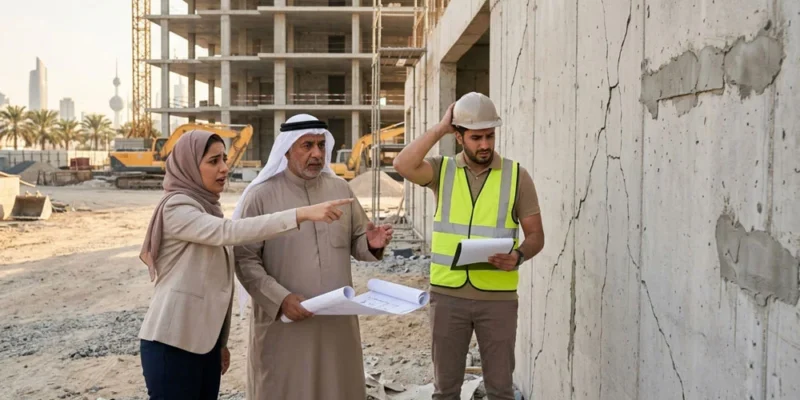
what are the common complaints about construction companies in kuwait-img

What are the common complaints about construction companies in Kuwait?

Construction is one of the most active sectors in Kuwait, driven by government infrastructure programs, private real estate development, and industrial expansion. With so many contractors operating in the market—ranging from small subcontractors to large, certified firms—clients often encounter a recurring set of complaints when projects don't go as planned. Understanding these common pain points helps property owners, developers, and government entities choose contractors more carefully, and it explains why factors like ISO certification, transparent governance, and proven track records matter so much when selecting a construction partner such as Kuwait Company for Process Plant Construction & Contracting (KCPC).

Key Takeaways

  • The most frequent complaints against construction companies in Kuwait involve project delays, cost overruns, and inconsistent quality control.
  • Poor communication, weak project management, and lack of accountability are common structural issues in less-regulated firms.
  • Certified, established contractors with ISO 9001, ISO 45001, and ISO 14001 accreditation tend to face fewer of these complaints due to standardized processes.
  • Safety practices, subcontractor management, and after-project support are additional areas where clients often raise concerns.
  • Choosing a contractor with a strong governance structure and diversified in-house capabilities reduces exposure to these risks.

Project Delays and Missed Deadlines

One of the most persistent complaints in Kuwait's construction industry is delayed project completion. Delays can stem from poor initial planning, underestimating timelines to win bids, supply chain disruptions, labor shortages, or inadequate coordination between civil, electrical, and mechanical teams. For clients, delays translate directly into financial losses—whether it's a delayed handover of a commercial building, a stalled infrastructure project, or postponed occupancy of a residential development.

Companies that manage projects "on time, within budget," as a guiding operational principle, tend to avoid this complaint because they build realistic schedules from the outset and maintain strong internal coordination between engineering disciplines, procurement, and site execution teams.

Budget Overruns and Hidden Costs

Cost overruns are closely tied to delays but represent a distinct complaint. Clients frequently report that final costs exceed original quotes due to poor initial estimating, scope creep, unanticipated site conditions, or contractors padding change orders. This is especially problematic on large-scale civil engineering, infrastructure, and specialty projects where the margin for error is high.

Contractors with integrated capabilities—covering civil engineering, road and infrastructure work, electrical engineering, water facilities, and engineering products under one roof—are often better positioned to control costs, since they are not dependent on multiple external subcontractors whose pricing and performance are harder to manage.

Inconsistent Quality Control

Quality complaints range from substandard concrete work and finishing defects to improperly installed electrical or water systems. In a market with many contractors of varying size and experience, quality assurance processes differ dramatically. Clients often complain that punch-list items are never fully resolved, or those defects appear shortly after handover.

This is one of the clearest differentiators between certified and non-certified firms. Companies holding ISO 9001:2015 (quality management), ISO 45001:2018 (occupational health and safety), and ISO 14001:2015 (environmental management) certifications are required to maintain documented quality control procedures throughout the project lifecycle—from materials sourcing to final inspection. This structured approach significantly reduces the frequency of quality-related complaints.

Weak Communication and Lack of Transparency

Many clients report frustration with contractors who fail to provide regular updates, ignore change requests, or become unresponsive once a contract is signed. This lack of transparency creates uncertainty, especially on complex turnkey projects involving multiple engineering disciplines and specialty work.

Companies with formal corporate governance structures, clear management hierarchies, and defined executive accountability tend to offer more reliable communication channels. When a client can reach identifiable project managers and escalate concerns through a structured chain of command, communication complaints diminish substantially.

Safety and Site Management Concerns

Workplace safety is a recurring concern in Kuwait's construction sector, particularly on large civil and infrastructure sites where heavy equipment, scaffolding, and multiple trades operate simultaneously. Complaints in this area include inadequate safety briefings, poor site housekeeping, and insufficient use of personal protective equipment.

Firms certified under ISO 45001:2018 are obligated to implement occupational health and safety management systems, which include hazard identification, risk assessment, and incident reporting protocols. This certification directly addresses one of the more serious complaint categories in the industry.

Subcontractor Coordination Problems

Because many construction companies rely heavily on subcontractors for specialty work—such as scaffolding, marble and natural stone installation, elevators, and electrical systems—coordination failures between the main contractor and subcontractors are a common source of complaints. Miscommunication can lead to sequencing errors, rework, and finger-pointing when defects arise.

Companies offering an in-house range of services—including scaffolding and equipment rentals, building transport systems (elevators), marble and natural stone products, and electrical engineering—reduce this risk by keeping more of the value chain under direct management rather than relying entirely on third-party subcontractors.

Environmental and Regulatory Compliance Issues

With Kuwait's growing emphasis on sustainable development, complaints have also emerged around environmental compliance—improper waste disposal, dust control failures, and non-adherence to environmental regulations during construction. ISO 14001:2015-certified companies are required to maintain formal environmental management systems, addressing these concerns systematically rather than reactively.

How to Avoid These Common Complaints

Clients evaluating construction companies in Kuwait should look for:

  • Triple ISO certification (9001, 45001, 14001) as a baseline indicator of process maturity.
  • A documented track record across public sector, private sector, local, and international projects.
  • Integrated service capabilities spanning civil engineering, infrastructure, electrical work, and specialty projects.
  • Transparent corporate governance and accessible executive management.
  • References from completed featured projects demonstrating on-time, within-budget delivery.

Selecting a professionally managed, certified contractor with diversified engineering capabilities—rather than relying solely on price—remains the most effective way to avoid the delays, cost overruns, and quality issues that dominate common complaints about construction companies in Kuwait.

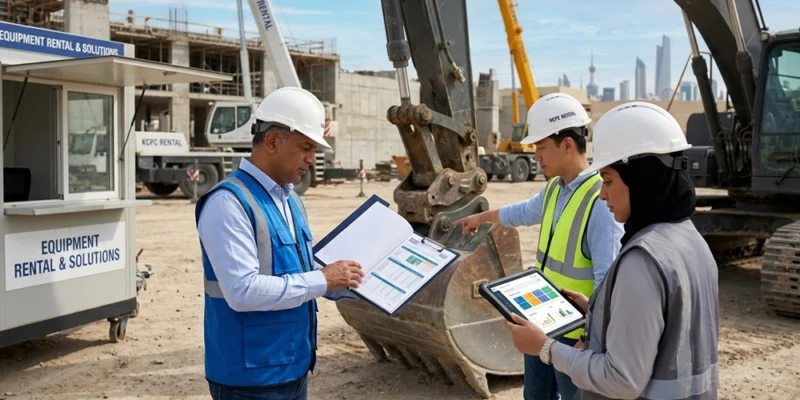
Construction professionals checking rental pricing on a Kuwait

What pricing options are available for renting construction equipment in Kuwait?

Construction equipment rental in Kuwait can be structured in several ways depending on the equipment required, the duration of the project, the operating conditions, and whether the customer needs equipment only or a more complete service. For contractors, developers, infrastructure companies, and industrial operators, understanding the available pricing structures is important because the lowest headline rental price does not always represent the lowest overall project cost.

Common pricing options include daily, weekly, monthly, long-term, and project-based arrangements. Customers may also encounter different pricing depending on whether the rental includes an operator, transportation to and from the site, fuel, maintenance, servicing, and other support. The right structure therefore depends on the type of work being performed and how intensively the equipment will be used.

For a company such as Kuwait Company for Process Plant Construction & Contracting (KCPC), equipment-related services can form part of a broader construction and engineering requirement. Customers evaluating rental arrangements should consider the complete commercial package, availability of equipment, maintenance support, site requirements, and the supplier's ability to coordinate equipment with the wider project.

Key takeaways

  • Construction equipment rental in Kuwait may be priced by the day, week, month, longer-term contract, or project requirement.
  • Short-term rentals can be appropriate for urgent or limited-duration work, while monthly or long-term arrangements may provide better commercial predictability for extended projects.
  • Customers should confirm whether transportation, operators, fuel, maintenance, servicing, and standby time are included or charged separately.
  • Equipment availability, condition, capacity, safety requirements, and suitability for the site can be as important as the quoted rental rate.
  • For larger projects, an integrated contractor with equipment capabilities and broader engineering services may simplify coordination and cost management.

Daily and Short-Term Equipment Rental

Daily rental is generally suitable when equipment is required for a short activity, emergency work, testing, a temporary site requirement, or a project with an uncertain duration. A daily rate can make sense when the equipment will only be used for a small number of working days.

However, customers should ask what constitutes a rental day. Some agreements may define a day by a fixed number of operating hours, while others may use a calendar-day basis. Overtime or usage beyond an agreed operating period can affect the final invoice.

Short-term customers should also confirm delivery and collection charges before accepting a quoted rate. A comparatively low daily equipment price can become more expensive if transportation, mobilisation, demobilisation, or other services are billed separately.

Weekly and Monthly Rental Options

Weekly and monthly arrangements are often more suitable for construction projects where equipment remains on site for an extended period. These structures can provide greater cost predictability than repeatedly renewing daily rentals.

Monthly rental is particularly relevant for civil works, infrastructure construction, industrial projects, building projects, and other activities where equipment is needed continuously. Before signing, the customer should clarify the rental period, minimum commitment, extension terms, maintenance responsibilities, and procedures for replacing equipment if a mechanical problem occurs.

A longer rental period may also require a discussion about equipment utilisation. If equipment will remain idle for substantial periods, the customer should determine whether the contract charges for the full period, operating hours, or a combination of both.

Long-Term and Project-Based Arrangements

Large construction and industrial projects may require equipment for many months or for different phases of work. In these cases, a negotiated long-term or project-based arrangement may be more appropriate than a standard short-term rental.

Project-based pricing can allow the equipment requirement to be considered alongside mobilisation, scheduling, site logistics, and other construction activities. It may also make it easier to coordinate equipment with civil, electrical, mechanical, infrastructure, and specialty work.

Customers should request a clear commercial breakdown showing what is included in the agreed price. The contract should identify equipment specifications, quantities, rental duration, mobilisation and demobilisation, maintenance, replacement arrangements, and any conditions that can trigger additional charges.

What Can Change the Final Rental Cost?

The final cost of construction equipment rental can depend on several factors. Equipment type and capacity are obvious factors, but location, duration, operating hours, site conditions, transportation requirements, operator requirements, and maintenance arrangements can also influence the total.

For example, heavy equipment needed at a remote or difficult-to-access site may involve additional mobilisation costs. Equipment requiring a trained operator may have a different commercial structure from equipment supplied for customer operation.

Customers should therefore compare quotations on a total-cost basis rather than comparing only the advertised daily or monthly rate. A useful quotation should make the major cost components visible and explain any exclusions.

Questions to Ask Before Renting Construction Equipment

Before selecting a rental arrangement in Kuwait, customers should ask:

  • What is the exact equipment model, capacity, and specification?
  • Is the quoted price daily, weekly, monthly, or project-based?
  • What operating hours are included?
  • Is an operator included?
  • Are delivery, mobilisation, and collection included?
  • Who pays for fuel?
  • Who is responsible for routine maintenance and repairs?
  • What happens if the equipment becomes unavailable?
  • Are standby or idle-time charges applicable?
  • What are the extension and early-return terms?
  • Are there minimum rental periods or deposits?
  • Can the supplier support multiple equipment requirements on the same project?

These questions help customers compare quotations consistently and reduce the risk of unexpected costs.

How KCPC Can Fit Into an Equipment Requirement

KCPC operates across construction and engineering activities, with capabilities that include civil engineering, infrastructure, electrical engineering, and specialty project-related services. Its broader capabilities can be relevant when equipment requirements form part of a larger construction or process-plant project.

For customers, the key consideration is not simply whether a supplier offers equipment at a particular rate. It is whether the supplier can support the operational requirements of the project, maintain reliable equipment availability, coordinate site activities, and provide clear commercial terms.

Customers considering KCPC or another construction partner should request a project-specific quotation and confirm exactly which equipment, services, operating conditions, and commercial inclusions are covered. This provides a more meaningful comparison than relying on a generic advertised rental price.

How to Compare Equipment Rental Quotations in Kuwait

A practical comparison should place each quotation into the same format. List the equipment type and specification, rental period, operating hours, transportation, operator, fuel, maintenance, insurance or other applicable responsibilities, standby conditions, and additional charges.

For longer projects, customers should also examine the supplier's ability to provide replacement equipment and technical support. Reliability can have a direct effect on project schedules, so a slightly different rental price should be considered together with service coverage and equipment availability.

The most useful approach is to compare the total expected cost and contractual responsibilities rather than focusing on one headline rate. Clear documentation at the quotation stage can prevent disagreements later in the project.

Construction equipment rental pricing in Kuwait can take several forms, from daily and weekly rentals to monthly, long-term, and project-based arrangements. The most appropriate option depends on project duration, equipment utilisation, site conditions, and the level of support required.

Customers should compare the complete commercial package, including transportation, operators, maintenance, fuel, standby conditions, and replacement arrangements. For major construction and industrial projects, the ability to coordinate equipment with wider engineering and construction activities can also be important.

A project-specific quotation from an established contractor or equipment provider gives the customer a clearer basis for evaluating cost, availability, support, and contractual responsibilities before committing to a rental arrangement.

How-can-I-find-trustworthy-reviews-for-construction-services-in-Kuwait-img

How can I find trustworthy reviews for construction services in Kuwait?

Finding trustworthy reviews for construction services in Kuwait requires more than looking at a star rating or reading a small number of online comments. Construction projects are usually high-value, technical, and long-term, so customers should evaluate the source of the review, the project context, the contractor's documented experience, and whether independent evidence supports the claims.

Useful sources can include established business directories, professional networks, project references, client testimonials, completed-project information, corporate websites, and industry documentation. Customers should also distinguish between reviews of small residential work and evidence relating to large commercial, industrial, infrastructure, or process-plant projects.

For a company such as Kuwait Company for Process Plant Construction & Contracting (KCPC), customers can supplement online research with information about its project history, engineering capabilities, certifications, and publicly documented corporate information. The goal is to build a balanced picture rather than relying on a single review platform.

Key takeaways

  • Do not rely on star ratings alone when evaluating a construction company.
  • Check whether reviews describe comparable project types, sizes, and services.
  • Look for multiple independent sources rather than repeated information from one source.
  • Verify major claims through project references, company documentation, certifications, and other evidence.
  • Ask prospective contractors for relevant client references where appropriate.
  • Consider both positive and negative feedback, while checking whether individual complaints are specific, credible, and supported by context.

Start With Independent Sources

A trustworthy review should ideally come from a source that is independent of the contractor. Customers can search business directories, professional platforms, industry listings, and other third-party sources where clients can provide feedback.

The number of reviews matters less than their quality and relevance. A contractor with a small number of detailed reviews from customers describing comparable projects may provide more useful information than a company with many generic comments.

Customers should also check dates. Construction companies can change management teams, capabilities, service offerings, and operating processes over time, so very old reviews may not accurately describe the current organisation.

Look for Project-Specific Information

The most useful construction reviews contain details about what was actually delivered. Customers should look for information about project type, scope, schedule, communication, quality, safety, coordination, documentation, and after-project support.

A comment such as "excellent company" provides limited information. A review that describes the contractor's performance on a specific type of project provides more context.

For large commercial or industrial work, customers should also consider whether the contractor has completed projects involving similar technical requirements. A residential renovation review should not automatically be treated as evidence of performance on a major process-plant or infrastructure project.

Check Client References

For significant construction contracts, prospective customers can ask the contractor for references from previous clients, subject to confidentiality and commercial restrictions. Speaking directly with a previous client can provide information that may not appear in public reviews.

Useful questions include:

  • Was the project completed within the agreed schedule?
  • How were changes and variations handled?
  • How responsive was the project management team?
  • Were quality issues addressed promptly?
  • How was communication during construction?
  • How were safety and site-management matters handled?
  • Was documentation delivered properly?
  • Would the client consider working with the contractor again?

These questions produce more useful evidence than simply asking whether the client was satisfied.

Review Certifications and Corporate Information

Reviews should be considered together with objective information about the contractor. Relevant evidence can include quality, occupational health and safety, and environmental certifications; documented project experience; corporate governance information; engineering capabilities; and the range of services offered.

The audit example for KCPC specifically highlights ISO 9001:2015, ISO 45001:2018, and ISO 14001:2015 as certifications associated with quality, occupational health and safety, and environmental management systems. Such certifications are not substitutes for customer reviews, but they can provide additional information about formal management processes.

Customers should verify certification claims and check whether the certification applies to the relevant organisation and scope of activities.

How to Interpret Negative Reviews

Negative reviews should not automatically be treated as proof that a construction company provides poor service. Construction projects can involve disputes over scope, variations, schedules, payment, site conditions, subcontractors, or responsibilities between multiple parties.

Instead, customers should look for patterns. A single vague complaint is different from several specific, independent complaints describing a similar issue.

It is also useful to see whether the contractor responded to the complaint and whether the response was factual and professional. A clear response does not necessarily resolve the underlying issue, but it can provide additional context for the customer researching the company.

How to Evaluate KCPC From Multiple Evidence Sources

For KCPC, prospective customers can combine public company information with project references, certifications, documented capabilities, and independent customer feedback. The audit material describes KCPC as a contractor with civil engineering, infrastructure, electrical engineering, and specialty capabilities.

A balanced review process should therefore examine both reputation and capability. Customers can compare the company's stated services with documented projects and then look for independent evidence about delivery, communication, quality, safety, and client experience.

This approach is more reliable than trying to determine a contractor's suitability from one review site or a single testimonial.

A Practical Review-Checking Checklist

Before selecting a construction company in Kuwait, customers can use this checklist:

  • Check several independent review sources.
  • Read detailed reviews rather than only ratings.
  • Check the review dates.
  • Look for projects comparable to yours.
  • Verify important claims through project references.
  • Review relevant certifications and their scope.
  • Examine the contractor's documented project history.
  • Ask about project management and communication.
  • Clarify how complaints, defects, variations, and disputes are handled.
  • Consider both positive and negative feedback.
  • Look for recurring patterns rather than isolated comments.

The result should be a documented assessment based on multiple evidence sources.

How can we help

Trustworthy construction reviews are most useful when they are combined with independent sources, project-specific references, documented experience, certifications, and direct client feedback. Online ratings can be a starting point, but they should not be the only basis for selecting a contractor.

For major projects in Kuwait, customers should investigate the contractor's relevant experience, management systems, technical capabilities, and record on comparable work. This broader approach provides a more complete understanding of the company and reduces the risk of making a decision based solely on incomplete online feedback.

Specialty construction site in Kuwait with workers and cranes

What kind of specialty construction projects are currently available in Kuwait?

Specialty construction in Kuwait covers projects that require more than standard building work and often involve specialised engineering, industrial systems, infrastructure, equipment, or technical coordination. The types of opportunities available can vary according to government programmes, industrial investment, infrastructure requirements, private development, and the needs of operating facilities.

Examples can include process-plant construction, civil and infrastructure works, roads and related infrastructure, electrical engineering, water-related facilities, industrial construction, specialty engineering packages, and projects requiring coordinated mechanical, electrical, civil, and other disciplines.

For a contractor such as Kuwait Company for Process Plant Construction & Contracting (KCPC), specialty work can involve combining construction execution with engineering capabilities and project coordination. Customers and project owners evaluating contractors should therefore look at both the technical scope of the project and the contractor's experience with comparable work.

Key takeaways

  • Specialty construction projects in Kuwait can span industrial, process-plant, infrastructure, civil, electrical, water, and other technically demanding areas.
  • Project owners should match contractor experience to the specific technical and operational requirements of the project.
  • Large specialty projects often require coordination across multiple engineering disciplines.
  • Safety, quality, environmental management, project controls, and specialist subcontractor coordination can be critical.
  • A contractor's documented experience on comparable projects can provide useful evidence when evaluating capability.

Process Plant and Industrial Construction

Process-plant construction involves facilities where industrial processes, equipment, utilities, and supporting infrastructure must operate together. These projects can require specialised planning, engineering coordination, installation, testing, commissioning support, and strict safety procedures.

The complexity of process-plant work means that a contractor may need experience beyond conventional building construction. Site coordination, equipment interfaces, piping or electrical requirements, access, safety systems, and operational constraints can all affect execution.

KCPC's full name and stated focus are directly associated with process-plant construction and contracting. Customers evaluating this type of project should review the contractor's relevant project history and technical scope rather than relying solely on general construction experience.

Civil Engineering and Infrastructure Projects

Civil and infrastructure work can include roads, site development, earthworks, structures, utilities, and other supporting infrastructure. Such projects may be undertaken for government entities, industrial facilities, private developments, and other large-scale clients.

Infrastructure projects often involve extensive site coordination and can be affected by traffic management, utilities, materials, environmental conditions, procurement, and interface requirements.

Contractors working in this area should demonstrate suitable equipment, engineering resources, project-management systems, safety processes, and experience with the relevant type and scale of work.

Electrical Engineering Projects

Electrical engineering can form a major component of industrial, commercial, infrastructure, and process-related construction. Projects may require electrical installation, distribution systems, equipment interfaces, controls, testing, and coordination with other disciplines.

Electrical work is rarely isolated on a large project. It can be closely connected to civil works, mechanical systems, equipment installation, commissioning, and operational requirements.

When comparing contractors, project owners should ask about the contractor's electrical capabilities, relevant completed work, engineering resources, safety procedures, testing processes, and ability to coordinate electrical work with the wider project.

Water and Utility-Related Facilities

Water facilities and utility infrastructure can involve technically specialised civil, mechanical, electrical, and operational requirements. Depending on the project, work can include construction or upgrading of facilities, supporting infrastructure, equipment installation, and associated engineering works.

Because water and utility facilities can remain operational during construction or require strict performance requirements, project planning and coordination are particularly important. Customers should assess whether the contractor has relevant experience and understands the operational constraints associated with the facility.

Specialty Products and Supporting Construction Services

Specialty construction can also include supporting services and products that are integrated into larger projects. The audit material references areas such as scaffolding and equipment rentals, elevators or building transport systems, marble and natural stone products, and electrical engineering.

The availability of these capabilities can reduce the number of separate interfaces that a project owner has to manage. However, customers should still confirm the exact scope, responsible teams, specifications, standards, and commercial terms for each package.

What Project Owners Should Check

Before awarding a specialty construction project, owners should examine:

  • Relevant completed projects.
  • Technical qualifications and engineering resources.
  • Quality-management systems.
  • Occupational health and safety processes.
  • Environmental-management procedures.
  • Equipment and mobilisation capabilities.
  • Subcontractor and supplier management.
  • Project scheduling and reporting.
  • Testing, inspection, and documentation procedures.
  • Ability to coordinate multiple disciplines.
  • References from comparable projects.

A contractor's experience should be matched to the actual technical requirements rather than judged solely by the number of projects completed.

KCPC and Specialty Construction

The audit material presents KCPC as an established contractor with capabilities across civil engineering, infrastructure, electrical engineering, water facilities, engineering products, and specialty services. It also describes integrated capabilities intended to reduce dependence on multiple external subcontractors.

For a prospective project owner, these capabilities are relevant when a project contains multiple technical packages that need coordinated delivery. However, the appropriate evaluation remains project-specific: the customer should request evidence of comparable projects, confirm the exact scope of services, and evaluate the resources proposed for the particular contract.

How can we help

Kuwait's specialty construction market can include process-plant, industrial, infrastructure, civil, electrical, water, and other technically demanding projects. These projects often require stronger coordination, specialist engineering resources, safety systems, quality controls, and project-management capabilities than routine construction.

Project owners should identify the technical requirements of their project first and then compare contractors based on documented experience, relevant capabilities, management systems, resources, and comparable project references. For projects involving several engineering disciplines, an integrated contractor can also simplify coordination across the project lifecycle.